Why Does My Circuit Breaker Keep Tripping? Causes and Safe Checks
A circuit breaker that keeps tripping is interrupting power for a reason. The cause might be too many appliances sharing a circuit, a faulty appliance, damaged wiring, or another electrical fault.
The timing can provide useful clues. Does it happen when a heater starts, after several appliances have been running, or when nothing appears to be switched on?
This guide explains the common causes and the external checks you can make without opening outlets, exposing wiring, or removing an electrical panel cover.
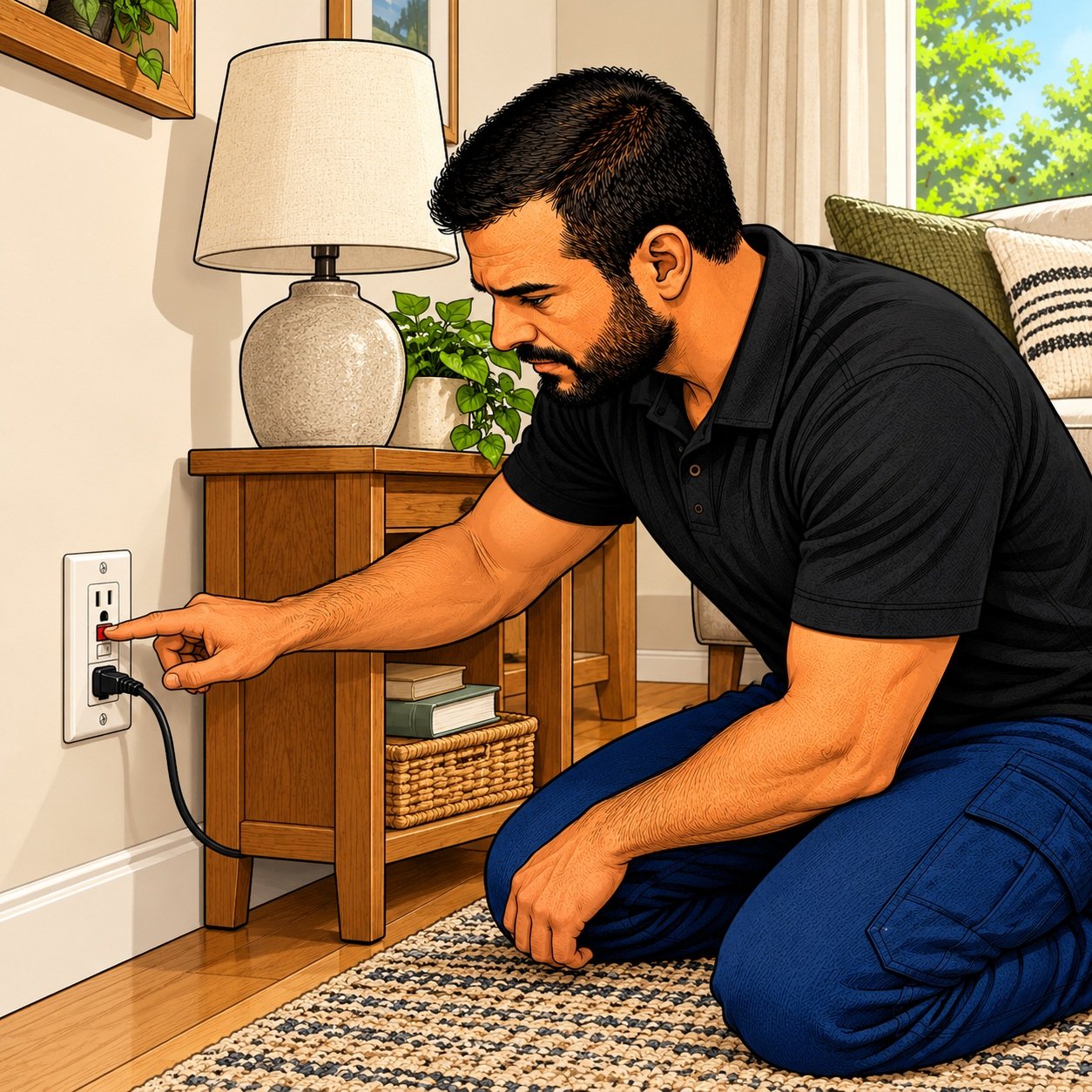
Start Here: Find Out When the Breaker Trips
Before resetting anything, note what happened immediately before the power went off.
- Several high-power appliances were running: The circuit may have been overloaded.
- One appliance started just before the trip: The appliance, its connection, or the circuit needs investigation.
- The device trips immediately after resetting: Leave it off and arrange professional assessment.
- Trips occur after rain or a spill: Moisture may be involved.
- It trips with plug-in appliances disconnected: Fixed equipment, wiring, or the protective device may be involved.
- You notice a burning smell, buzzing, or discoloration: Stop using the affected circuit and get help.
These patterns help narrow the investigation. They do not establish the fault by themselves.
Safety warning: For smoke, active sparking, or fire, keep clear, evacuate as needed, and contact emergency services. Do not approach a wet, damaged, or visibly overheating panel.

Tools and supplies
- Flashlight
- Phone or notebook
- Circuit directory or switchboard labels
- Appliance instructions
- Breaker or safety-switch operating instructions
- Photographs of accessible labels or fault indicators
You do not need a screwdriver, multimeter, or replacement breaker for these checks.
Only use normal, user-accessible controls. Do not remove the panel’s protective cover, open outlets, or disconnect fixed wiring.
For Australian readers: Fixed electrical repairs belong with a licensed electrician. In the US and Canada, requirements vary by jurisdiction. Keep the checks in this guide external and arrange qualified help for electrical repairs.
1. Identify Which Protective Device Has Tripped
People often call every switch in the panel a circuit breaker, but different devices provide different protection.
- Standard circuit breaker: Protects against excessive current, including overloads and short circuits.
- GFCI protection: Detects certain current imbalances associated with ground faults.
- AFCI protection: Detects hazardous arcing conditions.
- RCD safety switch: Common Australian terminology for residual-current protection.
- Combined device: Provides more than one protective function.
In Australia, an RCBO combines residual-current and overcurrent protection. US and Canadian devices may combine breaker, AFCI, and GFCI functions in different arrangements.
Queensland’s Electrical Safety Office emphasizes that a standard circuit breaker and a safety switch are not interchangeable forms of protection.
Read the visible label and instructions. A TEST button indicates a testable protective function, but does not identify every feature on its own.
2. Check for Warning Signs Before Touching Controls
Inspect the area from a safe position.
Stop if you notice:
- Scorching or melted plastic
- A burning smell
- Crackling or unusual buzzing
- Water around electrical equipment
- A damaged panel enclosure
- Shock or tingling from an appliance or fitting
Do not touch equipment to check whether it is hot.
If the panel appears unsafe, do not operate it. Contact an electrician or emergency services according to the situation.
If you have already reset the device and it has tripped again, leave it off. Repeated resetting is not a diagnostic method.
3. Check for an Overloaded Circuit
An overload occurs when the combined demand exceeds what a circuit is designed to carry.
For example, a portable heater and another high-power appliance may place too much demand on a shared circuit.
Common loads to consider include:
- Portable heaters
- Kettles
- Toasters
- Hair dryers
- Portable air conditioners
- Cooking appliances
- Workshop equipment
Outlets in different rooms may share the same circuit. Moving an appliance to the next outlet does not necessarily move it to a different supply.
Write down what was operating when the trip occurred. Stop using unnecessary loads together.
ESFI recommends avoiding overloaded circuits and recognizing electrical overload warning signs as part of household safety.
Do not fit a higher-rated breaker to accommodate more appliances. Circuit capacity must be assessed against the wiring, installation, and applicable requirements.
4. Inspect Accessible Plugs, Leads, and Power Strips
With the affected equipment switched off, visually inspect accessible cords and connections.
Look for:
- Split insulation
- Crushed or pinched leads
- Burn marks
- Damaged plugs
- Loose-fitting connections
- Signs of moisture
Disconnect equipment only when the plug and surrounding area are safe to handle. Grip the plug rather than pulling the cord.
Do not unplug a visibly melted or sparking connection. Keep clear and arrange help.
Leave suspect equipment disconnected. Do not test it on another circuit or use an extension lead to keep it running.
Power strips provide additional connection points; they do not increase the capacity of the circuit supplying them.
5. Record Whether a Particular Appliance Is Involved
A repeated association with one appliance is useful information for the electrician or appliance technician.
Note whether the trip happens:
- As soon as the appliance is connected
- When its switch is operated
- When a heating cycle begins
- When a motor starts
- After it has been running for a while
An appliance may have several operating stages, so a delayed trip does not rule it out.
However, do not deliberately reproduce the trip repeatedly. A faulty appliance, overloaded circuit, connection problem, or protective-device issue may produce similar symptoms.
Leave the suspected item disconnected until it has been assessed. For hardwired equipment, use only its normal user controls and arrange professional service.
6. Consider Moisture and Recent Changes
Think about whether the problem began after:
- Heavy rain
- A plumbing leak
- Outdoor cleaning
- Moving an appliance
- Drilling into a wall
- Renovation or electrical work
- Installing new equipment
Moisture can contribute to leakage-current faults that operate GFCI or RCD protection. Queensland guidance identifies faulty appliances, wiring, and power points among possible sources of current leakage.
Do not assume wet equipment is safe because its exterior has dried.
Leave affected equipment unused and arrange an assessment. Do not remove covers or apply a hair dryer to an outlet, switchboard, or appliance interior.
If tripping began after installation work, contact the installer and describe the timing.
7. Understand Why an Immediate Trip Needs Attention
A device that trips immediately may be responding to an ongoing fault.
Possible causes include a short circuit, leakage to earth, a damaged appliance, or a wiring problem. The protective device’s type affects what it can detect.
A short circuit creates an unintended low-resistance path that can allow excessive current. Other faults may trigger additional protective functions without overloading the circuit in the usual sense.
Do not reset repeatedly to determine which fault is present.
Southern California Edison advises that a repeatedly tripping breaker should only be reset after the problem has been corrected; possible causes include damaged cords, short circuits, and faulty wiring.
An electrician can test the circuit and identify the cause safely.
8. Reset Only When the Situation Is Appropriate
For a single trip with a clear, corrected explanation—such as unnecessary appliances overloading a circuit—a reset may be appropriate if the manufacturer’s instructions permit it.
Before that reset:
- Confirm there are no warning signs, water, or visible damage.
- Disconnect unnecessary or suspect plug-in loads where safe.
- Identify the correct device.
- Follow its operating instructions.
- Use only its external handle.
Many breakers must move fully to OFF before returning to ON, but follow the actual device instructions.
If it will not latch or trips again, stop. Do not force it, hold it on, or wait and keep trying.
For an unfamiliar panel, old fuse equipment, or an unexplained trip, ask an electrician rather than attempting a reset.
9. Note What Happens After Power Is Restored
Check that:
- Power remains steady.
- There is no unusual noise or smell.
- No outlet or appliance shows damage.
- The removed suspect appliance stays disconnected.
- The same high-demand combination is not used again.
Do not reconnect every appliance at once to test the circuit.
A successful reset does not prove that all wiring and equipment are sound. An unexplained trip, recurring problem, or new change in behavior still warrants assessment.
Keep notes about the affected rooms, device label, appliance use, weather, and timing. These details help the electrician investigate efficiently.
Common Mistakes to Avoid
- Repeatedly resetting a tripping device: Stop when the problem returns.
- Assuming every trip is an overload: Different protective functions detect different faults.
- Testing a suspect appliance elsewhere: Keep it disconnected.
- Installing a larger breaker: This can defeat the intended wiring protection.
- Opening the panel: Internal testing belongs with a qualified professional.
- Using extension leads as a workaround: They do not repair the underlying fault.
- Calling it “nuisance tripping” without diagnosis: An unexplained trip still needs attention.
Keep Your Circuits Working Safely: Prevention Tips
- Follow appliance connection instructions.
- Avoid running unnecessary high-power loads together on shared circuits.
- Keep leads clear of furniture, doors, and heat sources.
- Stop using damaged plugs, cords, and accessories.
- Keep water away from electrical connections.
- Follow GFCI, AFCI, and safety-switch testing instructions.
- Have an electrician update inaccurate circuit labels.
- Arrange an assessment when household demand outgrows the existing installation.
Frequently asked questions
Why does my circuit breaker trip with nothing plugged in?
Unplugging portable appliances does not disconnect fixed lights, hardwired equipment, or concealed wiring. The fault could also involve the protective device or another circuit arrangement. Leave it off and arrange testing.
Why does it trip after several minutes?
A delayed trip may involve accumulated load or a fault that appears during an appliance’s operating cycle. Timing alone does not confirm the cause.
Can a faulty appliance trip a breaker?
Yes. Depending on the fault and protection installed, an appliance may trigger overcurrent, ground-fault, residual-current, or arc-fault protection.
Does a tripping breaker mean it is faulty?
Not necessarily. It may be responding correctly to a problem elsewhere. A faulty device is one possibility, but replacement should follow diagnosis.
Can I replace it with a higher-amp breaker?
No. A higher rating is not a repair for repeated tripping. Any change requires professional assessment of the circuit and its permitted capacity.
Why does the breaker trip when my heater starts?
The heater may overload a shared circuit, have an internal fault, or expose another installation problem. Stop using the combination that caused the trip and have recurring issues assessed.
Related Posts